Process improvement and Lean Six Sigma
We make processes measurable and improve them where it pays off for customers and teams: with Lean Six Sigma, metrics such as lead time and error rate and, where it fits, data analysis and software.
Discuss your project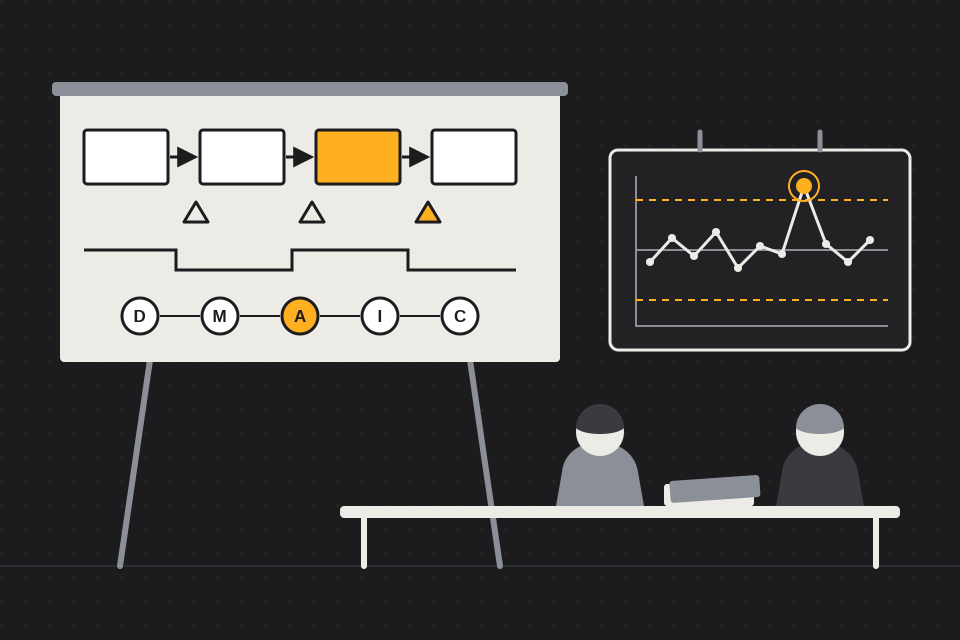
What you gain
- Metrics such as lead time and error rate as the starting point
- Causes checked against data, following DMAIC
- Measures whose effect can be measured
Approach and results
Measure before you change
We start with a shared description of the process and its metrics, such as lead time, error rate, cost or customer satisfaction. Using DMAIC from Lean Six Sigma, we narrow down the problem, check causes against data and agree on measures whose effect can be measured later.
Portfolio, product and organisation
Michael Schneider also supports companies with portfolio and product decisions, market launch and pricing, and collaboration between business units, procurement and customer service.
Data and software to match
Where processes produce data, we analyse it with statistics and Python. If needed, we build reports, dashboards or automated checks that keep improvements in place day to day.
Possible results
- Process description with metrics
- Root-cause analysis following DMAIC
- Action plan with measurement points
- On request: analyses and tools in Python